


What Happens During a Smog Check and What Drivers Should Expect
A smog check can feel more serious than a routine oil change because the result is pass or fail. The good news is that the process is usually straightforward. A technician checks whether your vehicle’s emissions system is working as designed, confirms key parts are present, and runs the required test for your vehicle type and state rules.
For most drivers, the appointment is quick. The part that causes stress is not the test itself, but not knowing what the technician is looking for. Once the steps are clear, a smog check becomes much easier to prepare for.

A smog check measures whether your car is polluting too much
A smog check is an emissions inspection. Its purpose is to make sure a vehicle does not release pollutants above the limits set by the state or local program.
The rules vary by state. Some states require emissions testing in certain counties only. Others require it statewide for most gasoline vehicles. Some newer vehicles may be exempt for a period of time, and older vehicles may be tested differently.
The basic goal stays the same. The test looks at the systems that help reduce harmful exhaust gases, such as:
Carbon monoxide
Hydrocarbons
Nitrogen oxides
Fuel vapors from the tank and fuel lines
Modern vehicles control these emissions with sensors, a catalytic converter, a fuel control system, evaporative emissions equipment, and an onboard computer. If one of those parts fails or has been removed, the vehicle may fail the inspection.
A smog check is not a full mechanical inspection. It does not tell you whether the brakes are safe, the tires are worn, or the engine will last another 100,000 miles. It focuses on emissions-related systems.
The technician starts with vehicle information
The first step is usually simple. The technician records or verifies basic details about the vehicle. This can include the year, make, model, engine type, vehicle identification number, odometer reading, and license plate.
This matters because the test must match the vehicle. A 2020 sedan, a 2001 pickup, and a classic car may not be inspected the same way. The test equipment and pass standards depend on the vehicle’s age, fuel type, and emissions design.
The technician may also check the vehicle’s certification label under the hood or near the door jamb. This label can show engine family information and emissions equipment details. It helps confirm what components should be present.
Before the test begins, the technician may ask whether the check engine light is on or whether the battery was recently replaced. That last question matters. If the battery was disconnected recently, the vehicle’s computer may not have completed its self-checks yet.
The check engine light is one of the biggest warning signs
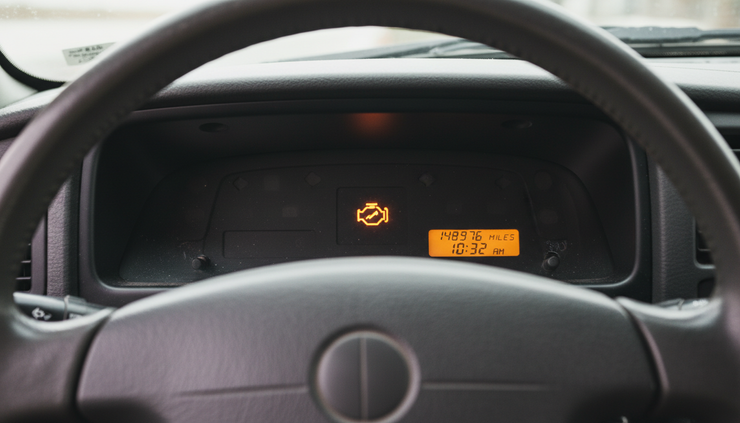
If the check engine light is on, many vehicles will fail a smog check automatically. That light means the onboard diagnostic system has detected a fault. Since smog checks often rely on that system, an active warning light is a clear problem.
The light may come on for many reasons. Some are minor. Some are expensive. Common emissions-related causes include:
A loose or damaged gas cap
A faulty oxygen sensor
A failing catalytic converter
A misfire
An evaporative emissions leak
A mass airflow sensor problem
A check engine light does not always mean the car drives poorly. Many emissions issues create no obvious symptoms at first. The engine may start normally, idle smoothly, and feel fine on the road, while the computer still detects a fault.
One detail matters here. Clearing the codes right before the appointment is not a reliable fix. The light may turn off temporarily, but the vehicle’s readiness monitors may show as incomplete. That can still lead to a failed or rejected test.
The visual inspection looks for required emissions parts
A smog check often includes a visual inspection. The technician looks for emissions equipment that should be installed on the vehicle.
This may include the catalytic converter, oxygen sensors, exhaust gas recirculation equipment, evaporative emissions hoses, positive crankcase ventilation parts, and other factory-required components. The exact list depends on the vehicle.
The technician is not just checking that parts exist. They may also look for signs that a component has been removed, disconnected, modified, or replaced with a part that does not meet local requirements.
Examples that can cause trouble include:
Missing catalytic converter
Cut or disconnected emissions hoses
Aftermarket intake without required approval
Modified exhaust that removes emissions equipment
Fuel vapor lines that are cracked or routed incorrectly
Loose gas cap or damaged gas cap seal
This is one reason a vehicle can fail even if it seems to run well. Emissions equipment must be present and connected as designed. A missing part is not ignored just because tailpipe emissions appear normal.
Most modern cars get an onboard diagnostic test
For vehicles built from the mid-1990s onward, the smog check usually includes an onboard diagnostic test. This is often called an OBD-II test.
The technician connects a scanner or test machine to the diagnostic port, usually located under the dashboard on the driver’s side. The machine communicates with the vehicle’s computer and checks several items.
It looks for stored emissions-related trouble codes. It checks whether the check engine light is commanded on. It also checks readiness monitors.
Readiness monitors are self-tests that the vehicle runs while it is driven. They help confirm that systems such as the catalytic converter, oxygen sensors, evaporative emissions system, and fuel control system have been evaluated by the computer.
If too many monitors are incomplete, the vehicle may not be ready for inspection. This can happen after:
Battery replacement
Recent code clearing
Certain repairs
Long periods without normal driving
Computer replacement
A monitor that is incomplete does not always mean something is broken. It may mean the car has not gone through the right mix of driving conditions yet. The vehicle may need more normal driving before testing.
Some vehicles may get a tailpipe emissions test
Not every smog check uses the same equipment. Some vehicles still receive a tailpipe test, especially older models or vehicles in certain programs.
During a tailpipe test, a probe goes into the exhaust pipe. The machine measures exhaust gases while the vehicle runs. Depending on local rules and vehicle type, the car may idle in place, run at a raised engine speed, or be tested on a dynamometer that spins the wheels in a controlled setting.
A tailpipe test can measure actual exhaust output. If emissions are too high, the vehicle fails even if it seems to drive normally.
Common reasons for high tailpipe emissions include:
Worn spark plugs or ignition problems
Vacuum leaks
Poor fuel control
Engine misfire
Failed oxygen sensor
Weak catalytic converter
Engine running too rich or too lean
A vehicle that has not been maintained well is more likely to have trouble here. Old oil, dirty filters, worn ignition parts, and unresolved engine problems can all affect emissions.

The evaporative emissions system may be checked
Gasoline does not only create emissions when it burns. Fuel vapors can escape from the tank, cap, hoses, and related components. The evaporative emissions system captures those vapors and routes them back into the engine to be burned.
Some test programs include checks related to this system. The technician may inspect the gas cap, look for damaged hoses, or rely on OBD-II data from the vehicle’s own evaporative system monitor.
A bad gas cap is one of the simplest failures. If the cap does not seal properly, fuel vapors can escape. It may also trigger the check engine light.
Other evaporative system problems can be harder to find. A small cracked hose or faulty purge valve can set a trouble code without any fuel smell. Repair shops often use smoke testing to locate leaks, but that is usually part of diagnosis after a failure, not the basic smog check itself.
What happens while you wait
From the driver’s side, the appointment is usually simple. You hand over the keys, wait in the lobby or nearby area, and let the technician run the required steps.
The vehicle may be moved into a test bay. The technician may leave it idling during parts of the inspection. You might see equipment connected under the dashboard or near the tailpipe. The hood may be opened for the visual inspection.
The total time depends on the vehicle and the testing program. Many inspections are completed in a short visit, but delays can happen if the station is busy, the vehicle needs time to warm up, or the test equipment requires extra steps.
Bring the items required in your area, which may include registration renewal paperwork or a notice from the motor vehicle agency. Requirements vary, so checking ahead can save a second trip.
How to prepare before a smog check
A little preparation can reduce the chance of a surprise failure. No prep step can cover up a real emissions problem, but basic maintenance and timing matter.
Before the appointment, check these items:
Make sure the check engine light is off
If the light is on, diagnose and repair the issue before testing. Do not just erase the code and drive straight to the station.
Drive the vehicle normally after battery work
If the battery was replaced or disconnected, give the vehicle time to complete its readiness checks. Mixed driving over several trips is often more useful than one short drive around the block.
Confirm the gas cap is tight
A loose gas cap can trigger a fault. Tighten it until it clicks if that design applies to your vehicle.
Take care of overdue maintenance
Fresh oil, a clean air filter, and healthy ignition parts can help the engine run as designed. Follow the maintenance schedule for your vehicle.
Avoid testing a car with obvious problems
Rough idle, misfires, stalling, fuel smells, or visible smoke are warning signs. Fix those issues first.
Warm up the engine
A fully warmed engine and catalytic converter work better than a cold one. Normal driving before the appointment can help the vehicle reach operating temperature.
What passing means
If the vehicle passes, the station usually sends the result electronically to the appropriate agency, where that process exists. You may also receive a printed certificate or report.
Passing means the vehicle met the emissions inspection requirements at that time. It does not guarantee that every engine part is perfect. It also does not mean the car will pass later if a sensor fails or the check engine light comes on.
Keep the paperwork until registration is complete. If the result was transmitted electronically, the paper copy can still help if there is a delay or record mismatch.
What happens if the vehicle fails
A failed smog check does not always mean the vehicle is beyond repair. It means the car did not meet one or more inspection requirements.
The report should show why it failed. The reason may be an active diagnostic trouble code, incomplete monitors, missing equipment, high tailpipe emissions, or a visual inspection problem.
Start with the failure report. It gives a repair shop a direction. For example, a code related to an oxygen sensor circuit is different from a catalytic converter efficiency code. A missing catalytic converter is different from a monitor that has not completed.
After repairs, the vehicle usually needs to be retested. Some areas have rules about where repairs must be done or what type of station can perform certain inspections. Follow the instructions on the report or renewal notice.
If the failure is due to incomplete readiness monitors, the fix may be more driving rather than parts replacement. If monitors remain incomplete after normal driving, a technician may need to diagnose why the self-test will not run.

Common myths about smog checks
Smog checks create a lot of garage-lot advice. Some of it is harmless. Some of it wastes time.
Myth | Reality |
Premium gas will make any car pass | Use the fuel your owner’s manual recommends. Premium fuel does not repair faulty emissions parts. |
Clearing the check engine light fixes the problem | It only erases the warning for now. The code may return, and readiness monitors may be incomplete. |
A car that drives fine will pass | Many emissions faults do not affect daily driving at first. |
Only the exhaust matters | Visual checks, computer data, gas caps, and required parts can all matter. |
Older cars always fail | A well-maintained older vehicle can pass if it meets the standard for its category. |
The best way to avoid a stressful smog check
The easiest smog check is the one that does not start with a mystery warning light. Keep up with regular maintenance, pay attention to engine behavior, and repair emissions-related faults before renewal time.
If your vehicle is due soon, do a quick self-check before booking the appointment. Look for warning lights. Make sure the gas cap is secure. Think about any recent battery work or code clearing. If something feels off, get it diagnosed first.
A smog check is not meant to be confusing. The technician is checking whether the vehicle’s emissions systems are present, ready, and working. When those systems are healthy, the test is usually just one more step on the way to renewing your registration.


Comments